


In the realm of railway embankment construction, the choice of materials plays a pivotal role in determining the long - term performance, durability, and cost - effectiveness of the project. Fiberglass Geocomposite, a revolutionary material in geotechnical engineering, has emerged as a game - changer. As a leading supplier of Fiberglass Geocomposite, I am excited to delve into the numerous advantages it offers in railway embankment construction.
Enhanced Reinforcement
One of the primary advantages of using Fiberglass Geocomposite in railway embankment construction is its superior reinforcement capabilities. Fiberglass has high tensile strength, which allows it to withstand significant forces. When incorporated into the embankment, it acts as a stabilizing element, distributing the load more evenly across the structure.
The Fiberglass Geotextile with Geogrid is a prime example of a product that combines the strength of a geogrid with the filtration and separation properties of a geotextile. The geogrid component provides high - strength reinforcement, while the geotextile helps in preventing the intermixing of different soil layers. This combination is particularly useful in railway embankments, where the loads from trains are concentrated and dynamic. By reinforcing the embankment, the risk of soil settlement, slope failure, and lateral movement is significantly reduced. This not only ensures the safety of the railway but also extends the service life of the embankment, reducing the need for frequent repairs and maintenance.
Improved Soil Stability
Fiberglass Geocomposite materials can improve soil stability in railway embankments. In areas with soft or unstable soils, traditional construction methods may face challenges due to excessive settlement or lateral spreading. Fiberglass Geocomposite products, such as Fiberglass Geogrids for Asphalt Pavement, can be used to reinforce the soil and enhance its bearing capacity.
The geogrid interlocks with the soil particles, creating a composite structure that is more resistant to deformation. This is especially important in railway embankments, where the repeated passage of heavy trains can cause soil compaction and displacement over time. By using Fiberglass Geocomposite, the soil can better withstand these cyclic loads, maintaining its integrity and preventing the formation of cracks and uneven surfaces. Additionally, the geocomposite can help in reducing the impact of water on the soil. Water can weaken the soil and cause erosion, but the geotextile component of the geocomposite can act as a filter, allowing water to drain while retaining the soil particles.
Filtration and Drainage
Proper filtration and drainage are crucial in railway embankment construction. Excess water in the embankment can lead to soil saturation, which reduces the soil's strength and can cause instability. Fiberglass Geocomposite materials, such as Fiberglass Composite Geotextile, offer excellent filtration and drainage properties.
The geotextile in the composite allows water to pass through while preventing the movement of fine soil particles. This helps in maintaining the proper moisture content in the embankment and preventing the build - up of hydrostatic pressure. In addition, the drainage function of the geocomposite can help in quickly removing water from the embankment, reducing the risk of water - related damage. This is particularly important in regions with high rainfall or in areas where the embankment is located near water bodies. By ensuring proper filtration and drainage, the geocomposite helps in maintaining the long - term stability and performance of the railway embankment.
Cost - Effectiveness
From a cost - effectiveness perspective, Fiberglass Geocomposite is an attractive option for railway embankment construction. Although the initial cost of Fiberglass Geocomposite materials may be slightly higher than some traditional materials, the long - term savings are significant. The enhanced reinforcement and stability provided by the geocomposite reduce the need for extensive foundation work and frequent repairs.
For example, in areas with poor soil conditions, traditional construction methods may require deep foundations or soil replacement, which can be very expensive. Using Fiberglass Geocomposite, the soil can be reinforced in - situ, eliminating the need for these costly measures. Additionally, the longer service life of the embankment means fewer disruptions to railway operations and lower maintenance costs over time. The reduced risk of soil settlement and slope failure also means that the railway can operate more safely and efficiently, minimizing the economic losses associated with service disruptions.
Environmental Sustainability
In today's construction industry, environmental sustainability is a key consideration. Fiberglass Geocomposite materials are relatively environmentally friendly. Fiberglass is a non - biodegradable material, which means it does not break down in the environment and can provide long - term performance. Moreover, by reducing the need for soil excavation and replacement, the use of Fiberglass Geocomposite helps in conserving natural resources.
In addition, the improved stability and durability of the embankment reduce the energy consumption associated with maintenance and repair work. This contributes to a lower carbon footprint over the life cycle of the railway embankment. The geotextile component of the geocomposite can also help in preventing soil erosion, which is beneficial for the surrounding ecosystem. By protecting the soil from erosion, the geocomposite helps in maintaining the biodiversity of the area and preventing sedimentation in nearby water bodies.

Ease of Installation
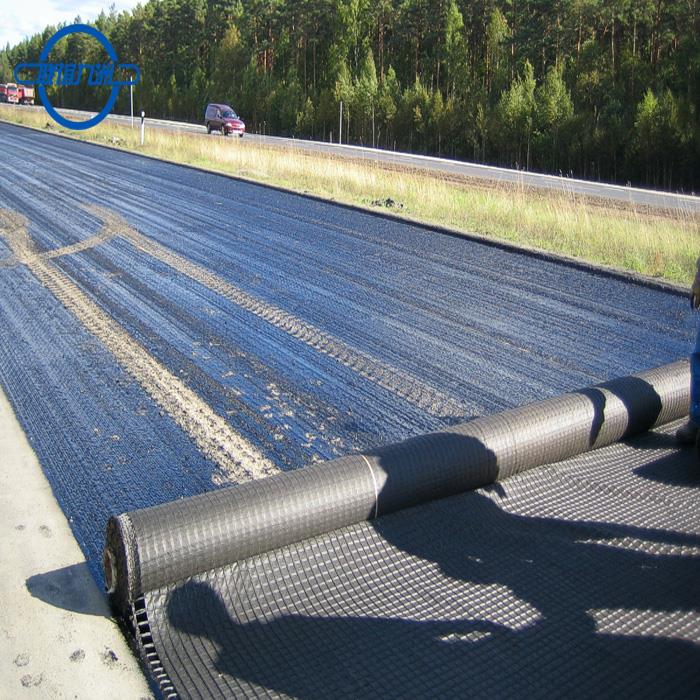
Another advantage of Fiberglass Geocomposite is its ease of installation. Compared to some traditional construction materials and methods, Fiberglass Geocomposite products are lightweight and flexible, making them easier to handle and install. The installation process is relatively simple and can be completed quickly, reducing the construction time and minimizing disruptions to railway operations.
The geocomposite can be easily rolled out and placed on the soil surface, and it can be cut to the required size and shape. This flexibility allows for easy adaptation to different embankment geometries and site conditions. In addition, the installation of Fiberglass Geocomposite does not require specialized equipment or highly skilled labor, which further reduces the installation cost and time. This is particularly beneficial in railway construction projects, where time is often of the essence, and any delay can have significant economic and operational impacts.
Compatibility with Other Materials
Fiberglass Geocomposite materials are compatible with a wide range of other construction materials. They can be used in combination with soil, gravel, asphalt, and concrete, allowing for versatile design solutions in railway embankment construction. For example, the Fiberglass Geogrids for Asphalt Pavement can be used to reinforce asphalt layers on top of the embankment, improving the performance and durability of the pavement.
The geocomposite can also be used in conjunction with geosynthetic clay liners or other waterproofing materials to enhance the waterproofing and protection of the embankment. This compatibility allows engineers to design railway embankments that meet specific performance requirements and site conditions, providing a customized solution for each project.
Resistance to Chemicals and Corrosion
Fiberglass Geocomposite materials have excellent resistance to chemicals and corrosion. In railway embankment construction, the embankment may be exposed to various chemicals, such as de - icing salts, industrial pollutants, and acidic or alkaline soils. Fiberglass is highly resistant to these chemicals, ensuring the long - term integrity of the geocomposite and the embankment.
The corrosion - resistant properties of Fiberglass Geocomposite also make it suitable for use in coastal areas or areas with high humidity, where traditional metal - based reinforcement materials may be prone to corrosion. By using Fiberglass Geocomposite, the risk of material degradation due to chemical exposure is minimized, and the embankment can maintain its strength and performance over time.
Conclusion
In conclusion, the use of Fiberglass Geocomposite in railway embankment construction offers a multitude of advantages, including enhanced reinforcement, improved soil stability, proper filtration and drainage, cost - effectiveness, environmental sustainability, ease of installation, compatibility with other materials, and resistance to chemicals and corrosion. As a supplier of Fiberglass Geocomposite, we are committed to providing high - quality products that meet the specific needs of railway construction projects.
If you are involved in railway embankment construction or are considering using Fiberglass Geocomposite in your next project, we invite you to contact us for more information and to discuss your requirements. Our team of experts can provide you with technical support and guidance to ensure that you select the most suitable Fiberglass Geocomposite products for your project. Let us work together to build safer, more durable, and more sustainable railway embankments.
References
- Bonaparte, R., & Christopher, B. R. (1994). Geosynthetics in Transportation Systems. ASCE Press.
- Koerner, R. M. (2012). Designing with Geosynthetics. Pearson.
- Giroud, J. P., & Bonaparte, R. (1989). Geotextile - reinforced unpaved roads. Journal of Geotechnical Engineering, 115(11), 1564 - 1585.