


What is the Stiffness of Plastic Geogrid?
As a leading supplier of plastic geogrids, I often encounter inquiries regarding the stiffness of these versatile products. Stiffness is a crucial property that significantly influences the performance and effectiveness of plastic geogrids in various geotechnical applications. In this blog post, I will delve into the concept of stiffness in plastic geogrids, explore its significance, and discuss the factors that affect it.
Understanding Stiffness in Plastic Geogrids
Stiffness, in the context of plastic geogrids, refers to the ability of the material to resist deformation under an applied load. It is a measure of how much a geogrid will stretch or deflect when subjected to a force. A stiffer geogrid will experience less deformation, providing better reinforcement and stability to the soil or other materials it is used with.
The stiffness of a plastic geogrid is typically characterized by its secant stiffness, which is the ratio of stress to strain at a specific point on the stress-strain curve. Secant stiffness is commonly measured at a strain level of 2% or 5%, depending on the application requirements. Higher secant stiffness values indicate a stiffer geogrid.
Significance of Stiffness in Geotechnical Applications
The stiffness of plastic geogrids plays a vital role in a wide range of geotechnical applications, including soil reinforcement, slope stabilization, and pavement reinforcement. Here are some key reasons why stiffness is important:
- Enhanced Soil Reinforcement: A stiffer geogrid can effectively transfer loads from the soil to the geogrid, reducing soil deformation and improving the overall stability of the soil mass. This is particularly important in applications such as retaining walls, embankments, and foundations, where soil reinforcement is essential to prevent soil failure.
- Slope Stabilization: In slope stabilization projects, a stiff geogrid can provide additional support to the soil, preventing slope erosion and landslides. The geogrid helps to distribute the forces acting on the slope more evenly, reducing the risk of slope failure.
- Pavement Reinforcement: Stiff plastic geogrids can be used to reinforce pavements, improving their load-bearing capacity and reducing the formation of cracks and rutting. By distributing the traffic loads more evenly, the geogrid helps to extend the service life of the pavement and reduce maintenance costs.
Factors Affecting the Stiffness of Plastic Geogrids
Several factors can influence the stiffness of plastic geogrids, including the following:
- Material Properties: The type of plastic material used in the geogrid manufacturing process has a significant impact on its stiffness. Polypropylene (PP) and polyethylene (PE) are commonly used materials for plastic geogrids, with PP generally offering higher stiffness than PE. The molecular structure and crystallinity of the plastic material also affect its stiffness.
- Manufacturing Process: The manufacturing process used to produce the geogrid can also affect its stiffness. Extruded biaxial geogrids, for example, are typically stiffer than woven or knitted geogrids due to their more uniform and dense structure. The extrusion process aligns the polymer chains in the geogrid, resulting in higher stiffness and strength.
- Geogrid Geometry: The geometry of the geogrid, including the aperture size, rib thickness, and strand spacing, can also influence its stiffness. Geogrids with smaller aperture sizes and thicker ribs generally have higher stiffness values. The orientation of the strands in the geogrid can also affect its stiffness, with biaxial geogrids providing better stiffness in both the longitudinal and transverse directions.
- Loading Conditions: The stiffness of a plastic geogrid can also be affected by the loading conditions it is subjected to. Factors such as the magnitude and duration of the load, the rate of loading, and the type of loading (e.g., static or dynamic) can all influence the geogrid's stiffness.
Measuring the Stiffness of Plastic Geogrids
The stiffness of plastic geogrids is typically measured using standardized test methods, such as ASTM D6637 or ISO 10319. These tests involve subjecting a geogrid specimen to a tensile load and measuring the resulting strain. The secant stiffness is then calculated based on the stress-strain data obtained from the test.

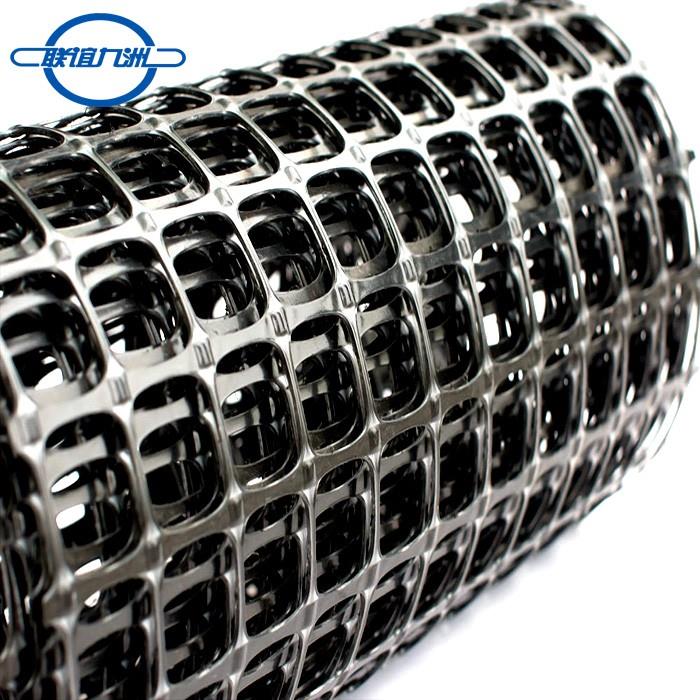
It is important to note that the stiffness of a plastic geogrid can vary depending on the test conditions and the specific geogrid product being tested. Therefore, it is essential to refer to the manufacturer's technical data sheets and specifications for accurate stiffness values.
Our Plastic Geogrid Products and Their Stiffness
As a supplier of plastic geogrids, we offer a wide range of products with different stiffness characteristics to meet the diverse needs of our customers. Our PP Biaxial Geogrid 30kn is a high-quality geogrid with excellent stiffness and strength properties. It is suitable for a variety of geotechnical applications, including soil reinforcement, slope stabilization, and pavement reinforcement.
Our Extruded Biaxial Geogrid is another popular product that offers superior stiffness and durability. It is manufactured using an advanced extrusion process, which results in a more uniform and dense structure, providing higher stiffness and better performance.
In addition, our Plastic Biaxial Geogrid is a cost-effective solution for geotechnical applications that require moderate stiffness. It is available in a range of strengths and aperture sizes to suit different project requirements.
Conclusion
The stiffness of plastic geogrids is a critical property that significantly affects their performance and effectiveness in geotechnical applications. By understanding the concept of stiffness, its significance, and the factors that affect it, you can make informed decisions when selecting the right plastic geogrid for your project.
As a trusted supplier of plastic geogrids, we are committed to providing high-quality products with excellent stiffness and strength properties. Our team of experts is available to assist you in choosing the most suitable geogrid for your specific application and to provide technical support and guidance throughout the project.
If you are interested in learning more about our plastic geogrid products or have any questions regarding their stiffness or other properties, please feel free to contact us. We look forward to the opportunity to discuss your project requirements and provide you with the best solutions.
References
- ASTM D6637 - Standard Test Method for Determining Tensile Properties of Geosynthetics Using Wide - Width Tension
- ISO 10319 - Geosynthetics - Determination of tensile properties by the wide - width strip method