


Hey there! As a supplier of Woven Polyester Geogrid, I've been getting a bunch of questions lately about the best way to install this stuff. So, I thought I'd put together this blog post to share some tips and tricks on the recommended installation method for Woven Polyester Geogrid.
First off, let's talk a bit about what Woven Polyester Geogrid is and why it's so useful. Woven Polyester Geogrid is a high-strength, lightweight material made from polyester fibers that are woven together to form a grid structure. It's commonly used in civil engineering and construction projects to reinforce soil, stabilize slopes, and prevent erosion. It can also be used in road construction to improve the performance of asphalt pavements and reduce the risk of cracking.
Now, let's get into the installation process. The first step is to prepare the site. This involves clearing the area of any debris, vegetation, or other obstacles that could interfere with the installation. You'll also want to make sure the ground is level and compacted to provide a stable base for the geogrid. If the ground is uneven, you may need to use a grader or other equipment to level it out.
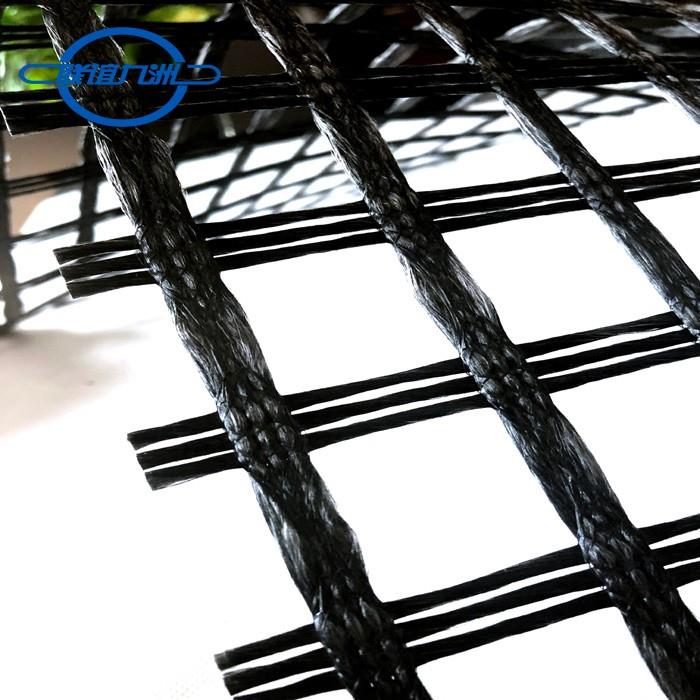

Once the site is prepared, it's time to lay out the geogrid. Start by unrolling the geogrid along the length of the area you want to reinforce. Make sure the geogrid is straight and aligned properly. You can use stakes or pins to hold the geogrid in place as you unroll it. It's important to overlap the geogrid sheets by at least 6 inches (15 cm) to ensure a strong connection between the sheets.
After the geogrid is laid out, you'll need to secure it to the ground. This can be done using a variety of methods, depending on the type of soil and the specific application. One common method is to use soil nails or anchors. These are long, metal rods that are driven into the ground through the geogrid to hold it in place. Another option is to use sandbags or other weights to hold the geogrid down.
Once the geogrid is secured, you can start backfilling the area with soil or other fill material. Make sure to fill the area evenly and compact the fill material as you go. This will help to ensure that the geogrid is fully embedded in the soil and that it provides maximum reinforcement. It's important to follow the manufacturer's recommendations for the type and amount of fill material to use.
If you're using Woven Polyester Geogrid in a road construction project, you'll also need to install a layer of aggregate on top of the geogrid. This will help to protect the geogrid from damage and provide a smooth surface for the asphalt pavement. The aggregate layer should be at least 4 inches (10 cm) thick and should be compacted to a density of at least 95% of the maximum dry density.
Now, let's talk about some of the different types of Woven Polyester Geogrid that are available. There are several options to choose from, including Polyester Biaxial Geogrid, PVC Coated Polyester Geogrid, and Knitted Polyester Geogrid. Each type of geogrid has its own unique properties and benefits, so it's important to choose the right one for your specific application.
Polyester Biaxial Geogrid is a popular choice for soil reinforcement and slope stabilization projects. It has high tensile strength in both the longitudinal and transverse directions, which makes it ideal for applications where the soil is subject to both vertical and horizontal forces. PVC Coated Polyester Geogrid is another option that offers additional protection against environmental factors such as UV rays and chemicals. It's often used in applications where the geogrid will be exposed to harsh conditions.
Knitted Polyester Geogrid is a more flexible option that is often used in applications where the soil is soft or unstable. It has a high degree of stretchability, which allows it to conform to the shape of the soil and provide better reinforcement. It's also lightweight and easy to install, which makes it a popular choice for small-scale projects.
In conclusion, the recommended installation method for Woven Polyester Geogrid involves preparing the site, laying out the geogrid, securing it to the ground, backfilling the area with fill material, and installing a layer of aggregate if necessary. It's important to choose the right type of geogrid for your specific application and to follow the manufacturer's recommendations for installation.
If you're interested in purchasing Woven Polyester Geogrid for your next project, I'd love to hear from you. We offer a wide range of high-quality geogrids at competitive prices. Whether you're a contractor, engineer, or DIY enthusiast, we can help you find the right product for your needs. Just reach out to us and we'll be happy to assist you with your purchase.
References
- ASTM D6637/D6637M - 18 Standard Specification for Woven Geotextiles Made from Polyolefin or Polyester Yarns
- FHWA Geosynthetics in Highway Construction: A Synthesis of Highway Practice
- Manual of Practice for Geosynthetics in Civil Engineering by the Geosynthetic Institute