


Polypropylene geogrid is a widely used geosynthetic material in civil engineering, known for its excellent mechanical properties, durability, and cost - effectiveness. As a polypropylene geogrid supplier, I am well - versed in the typical specifications of these products, which play a crucial role in determining their performance and suitability for various applications.
Material Composition
Polypropylene geogrids are primarily made from high - quality polypropylene resin. Polypropylene is a thermoplastic polymer that offers several advantages such as high chemical resistance, low moisture absorption, and good flexibility. The raw material is carefully selected to ensure the geogrid can withstand the harsh environmental conditions it may encounter during its service life. The polypropylene used in geogrids is often modified with additives to enhance its UV resistance, oxidation resistance, and overall stability. These additives help to prevent the degradation of the geogrid due to exposure to sunlight, oxygen, and other environmental factors, ensuring long - term performance.
Physical Dimensions
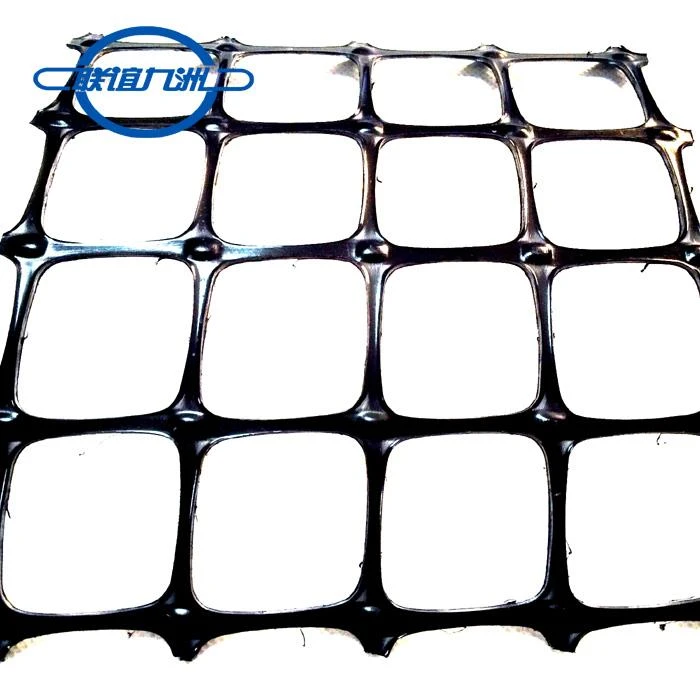
One of the key specifications of polypropylene geogrids is their physical dimensions, including aperture size, rib width, and overall thickness. The aperture size refers to the opening between the ribs of the geogrid. It can vary depending on the application. For example, in soil stabilization projects where the geogrid is used to reinforce granular soils, a larger aperture size may be preferred to allow for better interlocking with the soil particles. Common aperture sizes range from 20mm to 100mm.
The rib width is another important dimension. It affects the strength and stiffness of the geogrid. Wider ribs generally provide higher strength, but they also increase the weight and cost of the product. Rib widths typically range from 3mm to 10mm.
The overall thickness of the polypropylene geogrid is also a critical specification. Thicker geogrids tend to have higher tensile strength and better resistance to puncture and abrasion. The thickness can vary from 1mm to 5mm, depending on the required strength and the application.
Tensile Strength
Tensile strength is perhaps the most important specification of polypropylene geogrids. It measures the maximum amount of tension the geogrid can withstand before breaking. Tensile strength is usually expressed in kilonewtons per meter (kN/m).
The tensile strength requirements depend on the specific application. For example, in road construction, where the geogrid is used to reinforce the base layer, a higher tensile strength is needed to resist the traffic loads. Our company offers a range of polypropylene geogrids with different tensile strengths. For instance, we have PP Biaxial Geogrid 20kn, which has a tensile strength of 20 kN/m, suitable for some light - traffic roads or small - scale soil stabilization projects. The PP Biaxial Geogrid 30kn has a higher tensile strength of 30 kN/m and can be used in medium - traffic roads. And our PP Biaxial Geogrid BX1100 is designed for heavy - traffic roads and large - scale infrastructure projects, with even higher tensile strength.
Elongation at Break
Elongation at break is the percentage increase in length of the geogrid when it reaches its breaking point. It is an important specification as it indicates the ductility of the geogrid. A higher elongation at break means the geogrid can deform more before breaking, which can be beneficial in applications where the soil may experience significant settlement or deformation.
Typically, polypropylene geogrids have an elongation at break ranging from 10% to 30%. This allows the geogrid to adapt to the movement of the soil without losing its integrity. However, the optimal elongation at break depends on the specific application. In some cases, a lower elongation at break may be preferred to ensure that the geogrid provides immediate reinforcement, while in other cases, a higher value may be more suitable to accommodate soil deformation.
Chemical Resistance
Polypropylene geogrids have excellent chemical resistance, which is an important specification, especially in applications where the geogrid may come into contact with chemicals in the soil or groundwater. They are resistant to most acids, alkalis, and salts, making them suitable for use in a wide range of soil conditions.

This chemical resistance ensures that the geogrid will not be degraded by the chemical environment, maintaining its mechanical properties over time. For example, in coastal areas where the soil may contain high levels of salt, polypropylene geogrids can be used without the risk of corrosion or chemical degradation.
Installation and Compatibility
When considering the specifications of polypropylene geogrids, it is also important to take into account their installation requirements and compatibility with other construction materials. Polypropylene geogrids are relatively easy to install. They can be unrolled on the prepared soil surface and connected using appropriate methods such as overlaps or mechanical fasteners.
They are also compatible with a variety of construction materials, including granular soils, asphalt, and concrete. This compatibility allows them to be used in a wide range of construction projects, from road and railway construction to landfill lining and slope stabilization.
Applications Based on Specifications
The specifications of polypropylene geogrids determine their suitability for different applications. In road construction, geogrids with high tensile strength and appropriate aperture sizes are used to reinforce the base and sub - base layers. They help to distribute the traffic loads more evenly, reduce rutting, and increase the service life of the road.
In slope stabilization, geogrids with good elongation at break and high tensile strength are used to prevent soil erosion and landslides. They provide reinforcement to the soil, increasing its shear strength and stability.
In landfill lining, polypropylene geogrids with excellent chemical resistance are used to prevent the leakage of landfill leachate. They are placed between different layers of the landfill liner system to provide additional reinforcement and stability.
Conclusion
As a polypropylene geogrid supplier, understanding the typical specifications of these products is essential for providing the right solutions to our customers. The physical dimensions, tensile strength, elongation at break, chemical resistance, and other specifications all play important roles in determining the performance and suitability of polypropylene geogrids for different applications.
If you are in need of polypropylene geogrids for your construction project, we can offer a wide range of products with various specifications to meet your specific requirements. Whether you are working on a small - scale soil stabilization project or a large - scale infrastructure development, our experienced team can help you select the most appropriate geogrid. Please feel free to contact us to discuss your project needs and start a procurement negotiation.
References
- Koerner, R. M. (2012). Designing with Geosynthetics. Pearson.
- Bonaparte, R., & Daniel, D. E. (1987). Geosynthetics in landfill liners and covers. Journal of Geotechnical Engineering, 113(12), 1309 - 1326.
- Giroud, J. P., & Han, J. (2004). Design and construction of mechanically stabilized earth walls and reinforced soil slopes. ASCE Press.