


Hey there! As a supplier of Biaxial Geogrid 40kn, I've seen my fair share of issues with these products in the field. In this blog, I'm gonna talk about the common failures of Biaxial Geogrid 40kn and how we can solve them.
Common Failures of Biaxial Geogrid 40kn
1. Tensile Strength Loss
One of the most common problems we encounter is the loss of tensile strength. Over time, exposure to environmental factors like UV radiation, chemical substances in the soil, and mechanical stress can degrade the material of the geogrid. UV rays can break down the polymer chains in the geogrid, reducing its ability to withstand pulling forces. Chemicals in the soil, such as acids or alkalis, can also react with the geogrid material, weakening its structure. And continuous mechanical stress from soil movement or heavy loads can cause micro - cracks in the geogrid, which gradually grow and lead to a significant loss of strength.
2. Poor Bonding with Soil
Another frequent issue is the poor bonding between the Biaxial Geogrid 40kn and the soil. If the geogrid doesn't bond well with the surrounding soil, it won't be able to effectively distribute the load and reinforce the soil. This can happen if the soil is too dry or too wet. In dry soil, the particles are not cohesive enough to grip the geogrid properly. On the other hand, in very wet soil, the excess water can create a lubricating effect, preventing the soil from adhering to the geogrid. Also, improper installation, like not laying the geogrid flat or not covering it with enough soil, can lead to poor bonding.
3. Tear and Puncture
During installation or use, the Biaxial Geogrid 40kn can get torn or punctured. Sharp objects in the soil, such as rocks or roots, can easily pierce through the geogrid during installation. Heavy construction equipment moving over the geogrid can also cause tears. Once the geogrid is torn or punctured, its integrity is compromised, and it won't be able to perform its reinforcing function effectively.
4. Creep
Creep is a long - term deformation of the geogrid under a constant load. When the Biaxial Geogrid 40kn is subjected to a continuous load over an extended period, it gradually stretches and deforms. This can be a problem in applications where the geogrid needs to maintain its shape and strength over a long time, such as in road embankments or retaining walls. Creep can be more pronounced in high - temperature environments or when the load on the geogrid is close to its maximum capacity.
Solutions to These Failures
1. Protecting Against Tensile Strength Loss
To prevent tensile strength loss due to UV radiation, we can use geogrids with UV stabilizers. These stabilizers help to absorb and dissipate the UV energy, reducing the damage to the polymer chains. When it comes to chemical resistance, we can choose geogrids made from materials that are more resistant to the specific chemicals in the soil. For example, some polymers are more resistant to acids, while others are better against alkalis. And to minimize the impact of mechanical stress, we can ensure proper installation techniques, such as avoiding over - stretching the geogrid during installation and providing sufficient support for the soil above the geogrid.
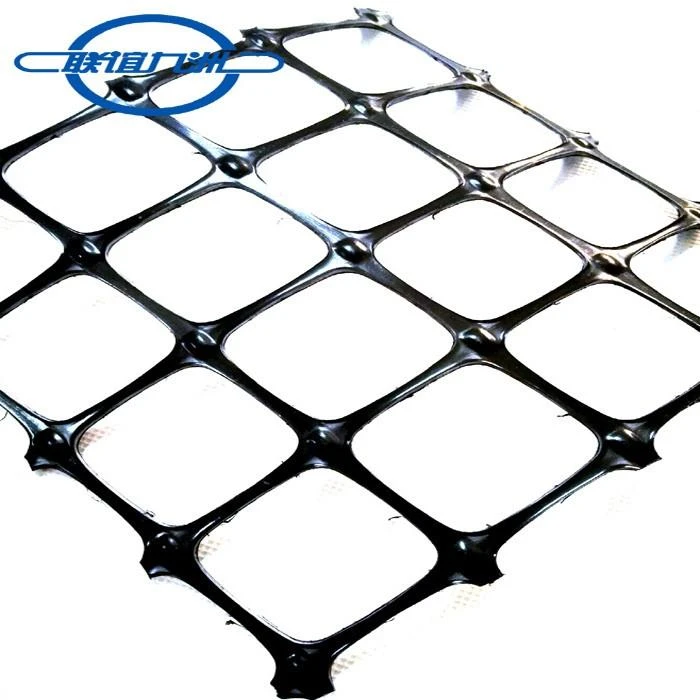

2. Improving Bonding with Soil
To improve the bonding between the geogrid and the soil, we need to ensure the soil has the right moisture content. If the soil is too dry, we can add water to it before installing the geogrid. If it's too wet, we may need to wait for it to dry out or take measures to drain the excess water. Proper installation is also crucial. We should make sure the geogrid is laid flat and evenly, and then cover it with a sufficient thickness of soil. Compacting the soil above the geogrid can also enhance the bonding.
3. Preventing Tear and Puncture
Before installing the Biaxial Geogrid 40kn, we should clear the installation area of any sharp objects like rocks and roots. If necessary, we can use a protective layer, such as a non - woven geotextile, between the geogrid and the soil to prevent direct contact with sharp objects. During construction, we need to be careful when operating heavy equipment to avoid running over the geogrid.
4. Addressing Creep
To reduce creep, we can choose geogrids with higher creep resistance. Some geogrids are specifically designed to have better long - term performance under constant loads. We can also limit the load on the geogrid to a level well below its maximum capacity. Additionally, in high - temperature environments, we can use geogrids that are more heat - resistant.
Other Related Products
If you're looking for other options, we also offer Extruded Biaxial Geogrid, which has its own unique properties and advantages. And for projects with lower load requirements, we have PP Biaxial Geogrid 20kn and PP Biaxial Geogrid 30kn. These products can be a great fit depending on your specific needs.
Conclusion
In conclusion, while Biaxial Geogrid 40kn is a great product for soil reinforcement, it does come with some common failures. But with the right knowledge and proper solutions, we can overcome these issues and ensure the long - term performance of the geogrid. If you're facing any problems with your geogrid or are in the market for a new one, don't hesitate to reach out. We're here to help you make the best choice for your project. Whether it's choosing the right product, solving installation problems, or dealing with long - term performance issues, we've got the expertise. So, if you're interested in purchasing Biaxial Geogrid 40kn or any of our other products, let's start a conversation and see how we can work together to meet your project requirements.
References
- Geosynthetics Institute. (20XX). Guidelines for Geogrid Installation.
- ASTM International. (20XX). Standards for Geogrid Testing and Performance.