


Hey there! As a supplier of plastic geogrid, I've seen firsthand how this amazing material is revolutionizing civil engineering. In this blog, I'm gonna share with you the various applications of plastic geogrid in civil engineering.
Soil Stabilization
One of the most common uses of plastic geogrid is soil stabilization. When building roads, embankments, or retaining walls, the soil often needs to be strengthened to prevent erosion and settlement. Plastic geogrid acts like a reinforcement, interlocking with the soil particles and distributing the load more evenly. This not only improves the stability of the soil but also increases its bearing capacity.
For example, when constructing a new road, the subgrade soil might not be strong enough to support the heavy traffic. By installing plastic geogrid at the base of the road, we can significantly enhance the soil's performance. The geogrid helps to prevent lateral movement of the soil, reducing the risk of rutting and cracking on the road surface.
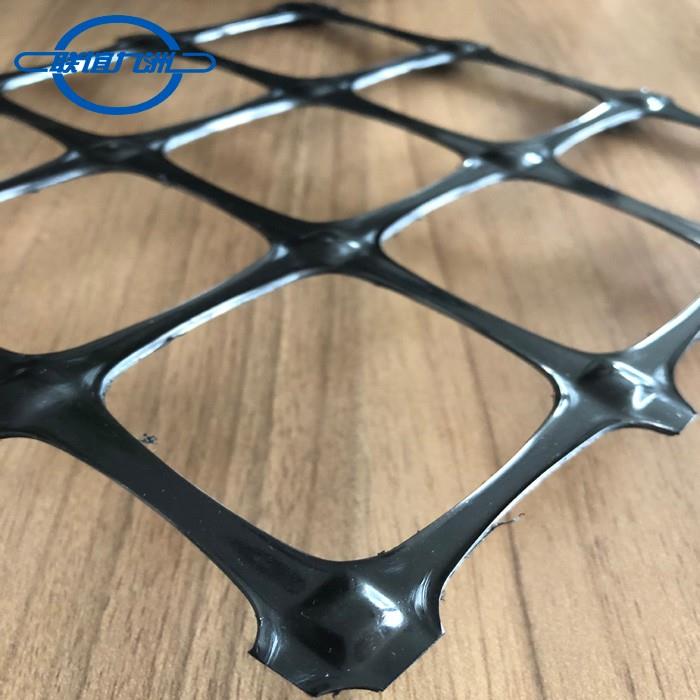
There are different types of plastic geogrids available for soil stabilization. Biaxial Geogrid is a popular choice. It has high tensile strength in both the machine and cross - machine directions, making it ideal for applications where loads are applied from multiple directions. Our PP Biaxial Geogrid 20kn and Biaxial Geogrid 40kn offer different levels of strength to meet various project requirements.
Retaining Wall Construction
Retaining walls are structures used to hold back soil and prevent it from sliding down slopes. Plastic geogrid plays a crucial role in the construction of these walls. It is used as a reinforcement within the backfill soil of the retaining wall.
When we build a retaining wall with plastic geogrid, we place layers of geogrid at regular intervals within the backfill. The geogrid interacts with the soil, creating a composite structure that is stronger and more stable. This allows the retaining wall to withstand greater lateral pressures from the soil behind it.
The use of plastic geogrid in retaining wall construction has several advantages. It reduces the amount of concrete or other traditional materials needed, which can save costs. It also makes the construction process faster and easier. Plus, the flexibility of the geogrid allows the retaining wall to adapt to some degree of settlement without significant damage.
Slope Protection
Slopes are prone to erosion, especially in areas with heavy rainfall or high - velocity wind. Plastic geogrid can be used to protect slopes and prevent soil erosion. By covering the slope surface with geogrid and then adding a layer of soil or vegetation, we can create a stable and erosion - resistant slope.
The geogrid holds the soil in place, preventing it from being washed away by water or blown away by wind. It also provides a framework for vegetation growth. The roots of the plants can penetrate through the geogrid, further stabilizing the slope. This combination of geogrid and vegetation is an effective and environmentally friendly way to protect slopes.
Pavement Reinforcement
In pavement engineering, plastic geogrid can be used to reinforce asphalt pavements. When placed between the asphalt layers, the geogrid helps to distribute the traffic loads more evenly, reducing the stress on the pavement.
This results in less cracking and rutting on the pavement surface, extending the service life of the road. It also improves the resistance of the pavement to fatigue and thermal cracking. Using plastic geogrid in pavement reinforcement can save on maintenance costs in the long run, as the pavement will require fewer repairs and resurfacing.
Landfill Liner Systems
Landfills need to be properly lined to prevent the leakage of waste and contaminants into the surrounding environment. Plastic geogrid can be incorporated into landfill liner systems.
It can be used as a reinforcement for the liner materials, such as geomembranes. The geogrid helps to improve the mechanical properties of the liner, making it more resistant to puncture and tear. This ensures the integrity of the landfill liner system and reduces the risk of environmental pollution.
Drainage Applications
Plastic geogrid can also be used in drainage systems. In some cases, it can be used as a filter or separator in drainage layers. It allows water to pass through while preventing the migration of fine soil particles.
This is important in maintaining the efficiency of the drainage system. For example, in a French drain, the geogrid can be used to separate the gravel layer from the surrounding soil, ensuring that the drain does not get clogged with soil.

Benefits of Using Plastic Geogrid in Civil Engineering
There are many benefits to using plastic geogrid in civil engineering projects. Firstly, it is cost - effective. Compared to traditional construction materials, plastic geogrid is relatively inexpensive. It can reduce the amount of material needed for a project, such as concrete or steel, which can lead to significant cost savings.
Secondly, it is easy to install. Plastic geogrid is lightweight and flexible, making it easy to handle and install on - site. This can speed up the construction process and reduce labor costs.
Thirdly, it is durable. Plastic geogrid is resistant to corrosion, chemicals, and biological degradation. This means it can maintain its performance over a long period of time, even in harsh environmental conditions.
Finally, it is environmentally friendly. Many plastic geogrids are made from recyclable materials, and their use can help to reduce the environmental impact of construction projects. For example, in slope protection, the combination of geogrid and vegetation can enhance the ecological value of the area.
Why Choose Our Plastic Geogrid
As a plastic geogrid supplier, we offer high - quality products that meet international standards. Our geogrids are manufactured using advanced technology and the best raw materials. We have a wide range of products with different specifications to meet the diverse needs of civil engineering projects.
Our team of experts is always ready to provide technical support and advice. Whether you are working on a small - scale residential project or a large - scale infrastructure project, we can help you choose the right plastic geogrid for your application.
If you're involved in a civil engineering project and think plastic geogrid could be a good fit, I encourage you to get in touch with us. We'd love to discuss your project requirements and see how our products can help you achieve your goals. Let's work together to build more stable, durable, and cost - effective civil engineering structures.
References
- Koerner, R. M. (2012). Designing with Geosynthetics. Pearson Prentice Hall.
- Greenwood, D. A. (2008). Geosynthetics in Civil Engineering. Thomas Telford.