


Hey there! As a Polypropylene Geogrid supplier, I often get asked how to calculate the quantity of Polypropylene Geogrid needed for a project. It's a crucial question because getting the quantity right can save you time, money, and headaches down the road. So, let's dive into it!
Understanding Polypropylene Geogrid
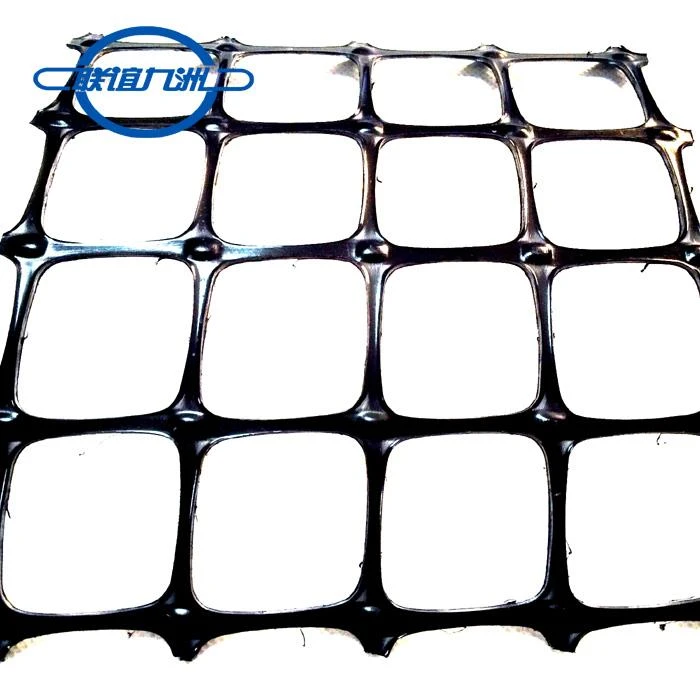
First off, let's quickly go over what Polypropylene Geogrid is. It's a type of geosynthetic material made from polypropylene. It's super strong and flexible, and it's used in a variety of civil engineering projects like road construction, slope stabilization, and retaining walls. There are different types, like the Extruded Biaxial Geogrid, Plastic Geogrid, and PP Biaxial Geogrid 20kn. Each type has its own unique properties and uses, so it's important to choose the right one for your project.
Step 1: Define the Project Area
The first step in calculating the quantity of Polypropylene Geogrid is to figure out the area of the project where you'll be using it. This could be the length and width of a road, the surface area of a slope, or the dimensions of a retaining wall. Measure these dimensions as accurately as possible. You can use a measuring tape for smaller areas, and for larger projects, you might need more advanced surveying equipment.
Let's say you're working on a road project. Measure the length of the road section you're treating and the width of the roadbed. Multiply these two numbers together to get the total area. For example, if the road is 100 meters long and 10 meters wide, the area is 100 x 10 = 1000 square meters.
Step 2: Consider Overlap Requirements
Most Polypropylene Geogrids need to be overlapped when installed. The amount of overlap required depends on the type of geogrid and the project specifications. Typically, an overlap of 150 - 300 millimeters is common.
To account for the overlap, you need to add a little extra to the total area you calculated in Step 1. Let's say the overlap requirement is 200 millimeters (or 0.2 meters). If you're covering a rectangular area, you'll need to add an extra 0.2 meters to both the length and the width.
Using our road example, if we add 0.2 meters to the length and 0.2 meters to the width, the new dimensions for calculating the geogrid area are (100 + 0.2) x (10 + 0.2) = 100.2 x 10.2 = 1022.04 square meters.
Step 3: Factor in Waste and Spoilage
It's always a good idea to account for some waste and spoilage when calculating the quantity of Polypropylene Geogrid. During installation, there might be some cutting, trimming, or damage to the geogrid. A common rule of thumb is to add 5 - 10% to the total area to account for waste.
Let's go with a 7% waste factor for our example. Multiply the area we calculated with the overlap (1022.04 square meters) by 1.07 (which is 1 + 0.07). So, 1022.04 x 1.07 = 1093.5828 square meters.
Step 4: Check the Geogrid Roll Size
Polypropylene Geogrids are usually sold in rolls. You need to know the width and length of the rolls you're going to use. For example, a common roll size might be 4 meters wide and 50 meters long, which gives a roll area of 4 x 50 = 200 square meters.
To find out how many rolls you need, divide the total area (including overlap and waste) by the area of one roll. Using our example, divide 1093.5828 square meters by 200 square meters per roll. 1093.5828 / 200 = 5.467914 rolls. Since you can't buy a fraction of a roll, you'll need to round up to 6 rolls.

Step 5: Confirm with Project Specifications
Before finalizing your order, it's crucial to double - check with the project specifications. Sometimes, there might be specific requirements regarding the type of geogrid, the installation method, or other factors that could affect the quantity needed. You don't want to end up with too much or too little geogrid.
Tips and Tricks
- Get Professional Advice: If you're unsure about any part of the calculation, don't hesitate to consult with a civil engineer or an experienced installer. They can provide valuable insights based on their real - world experience.
- Buy from a Reputable Supplier: As a Polypropylene Geogrid supplier, I can tell you that quality matters. Buying from a reliable supplier ensures that you get a product that meets the required standards and performs well in your project.
- Keep Records: Keep detailed records of your calculations, measurements, and any changes to the project plan. This will help you in case you need to make adjustments or if there are any issues during the project.
Conclusion
Calculating the quantity of Polypropylene Geogrid needed for a project might seem a bit complicated at first, but by following these steps, you can get an accurate estimate. Remember to define the project area, account for overlap and waste, check the roll size, and confirm with the project specifications.
If you're in the process of planning a project and need Polypropylene Geogrid, I'd love to help you out. Whether you have questions about the types of geogrid available, the quantity you need, or anything else, feel free to reach out. We're here to make sure your project goes smoothly.
References
- Civil Engineering Handbook: Geosynthetics, various authors
- Polypropylene Geogrid Installation Guidelines, industry standards documents