


Woven polyester geogrid is a high - performance geosynthetic material that has gained significant attention in the field of geotechnical engineering. As a supplier of woven polyester geogrid, I am often asked whether it can be used in retaining wall construction. In this blog, I will explore the feasibility, advantages, and considerations of using woven polyester geogrid in retaining wall projects.
The Basics of Retaining Wall Construction
Retaining walls are structures designed to hold back soil or other materials and prevent them from sliding or collapsing. They are commonly used in various applications, such as highway construction, building foundations, and landscaping. The main types of retaining walls include gravity walls, cantilever walls, and reinforced walls. Reinforced retaining walls, in particular, rely on the use of reinforcement materials to enhance the stability and strength of the soil mass.
Properties of Woven Polyester Geogrid
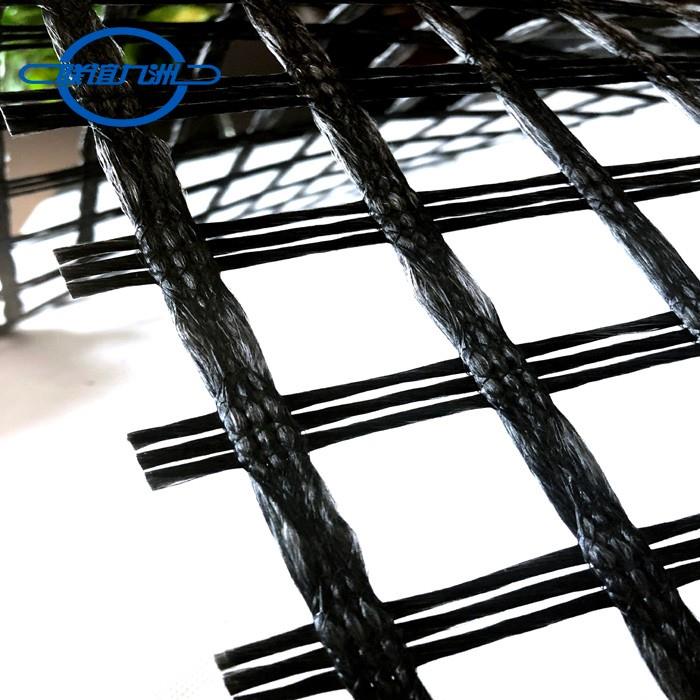
Woven polyester geogrid is made from high - tenacity polyester yarns that are woven into a grid pattern. This unique structure gives it several important properties:
- High Tensile Strength: Polyester fibers have excellent tensile strength, which allows the geogrid to withstand large forces without breaking. This is crucial in retaining wall construction, where the geogrid needs to resist the lateral pressure exerted by the soil.
- Low Creep: Creep is the gradual deformation of a material under a constant load over time. Woven polyester geogrid has low creep characteristics, ensuring that it maintains its strength and shape over the long term. This is essential for the long - term stability of retaining walls.
- Chemical Resistance: Polyester is resistant to many chemicals, including those commonly found in soil, such as acids and alkalis. This makes the geogrid suitable for use in a wide range of soil conditions.
- Aperture Size and Shape: The aperture size and shape of the geogrid can be customized to suit different soil types and construction requirements. A proper aperture size allows for good interlocking between the geogrid and the soil, enhancing the reinforcement effect.
Advantages of Using Woven Polyester Geogrid in Retaining Wall Construction
- Improved Soil Reinforcement: When installed in a retaining wall, the woven polyester geogrid forms a composite structure with the soil. The geogrid distributes the lateral soil pressure more evenly, reducing the stress concentration and increasing the overall stability of the wall. This can result in a more cost - effective design, as it may allow for the use of less expensive backfill materials or a smaller wall footprint.
- Ease of Installation: Woven polyester geogrid is relatively lightweight and flexible, making it easy to handle and install on the construction site. It can be cut to the required size and shape using simple tools, and it can be quickly unrolled and placed in position. This reduces the installation time and labor costs compared to traditional retaining wall construction methods.
- Enhanced Drainage: The open grid structure of the geogrid allows water to pass through, promoting drainage within the soil mass. This is important in preventing the build - up of hydrostatic pressure behind the retaining wall, which can lead to wall failure.
- Long - Term Durability: Due to its high tensile strength, low creep, and chemical resistance, woven polyester geogrid can provide long - term performance in retaining wall applications. It can withstand the harsh environmental conditions and the long - term loading associated with retaining walls, ensuring the safety and stability of the structure over its design life.
Case Studies
There have been numerous successful applications of woven polyester geogrid in retaining wall construction around the world. For example, in a highway construction project, a retaining wall was built using woven polyester geogrid to support the embankment. The geogrid was installed at regular intervals within the soil mass, and the wall was backfilled with granular material. After several years of service, the wall remained stable, with no signs of significant deformation or failure. This case study demonstrates the effectiveness of woven polyester geogrid in enhancing the stability of retaining walls.
Considerations for Using Woven Polyester Geogrid in Retaining Wall Construction
- Soil Compatibility: It is important to ensure that the woven polyester geogrid is compatible with the soil type used in the retaining wall. Different soil types have different properties, such as particle size, density, and shear strength. The aperture size and shape of the geogrid should be selected to achieve optimal interlocking with the soil. For example, in a fine - grained soil, a geogrid with smaller apertures may be more suitable.
- Installation Quality: Proper installation of the geogrid is crucial for its performance. The geogrid should be installed at the correct depth and orientation, and it should be properly anchored to prevent slippage. The backfill material should be placed and compacted in layers over the geogrid to ensure good contact and interlocking.
- Design Considerations: The design of the retaining wall should take into account the properties of the geogrid, the soil conditions, and the expected loads. A professional geotechnical engineer should be involved in the design process to ensure that the wall is safe and stable. The design should also consider factors such as seismic activity, water table fluctuations, and the long - term performance of the geogrid.
Product Recommendations
As a supplier of woven polyester geogrid, we offer a range of products suitable for retaining wall construction. Our Polyester Geogrid for Retaining Wall is specifically designed to meet the requirements of retaining wall applications. It has high tensile strength, low creep, and excellent chemical resistance.
We also provide PVC Coated Polyester Geogrid, which offers additional protection against environmental factors, such as UV radiation and abrasion. This can be particularly useful in exposed retaining wall applications.
For applications that require high - strength reinforcement in both the longitudinal and transverse directions, our Polyester Biaxial Geogrid is an ideal choice. It provides uniform reinforcement in two directions, enhancing the overall stability of the retaining wall.
Conclusion
In conclusion, woven polyester geogrid can be effectively used in retaining wall construction. Its high tensile strength, low creep, chemical resistance, and other properties make it a suitable reinforcement material for enhancing the stability and durability of retaining walls. However, proper consideration should be given to soil compatibility, installation quality, and design requirements.
If you are interested in using woven polyester geogrid in your retaining wall project, I encourage you to contact us for more information and to discuss your specific needs. Our team of experts is ready to provide you with professional advice and high - quality products to ensure the success of your project.

References
- Bonaparte, R., & Christopher, B. R. (1990). Geosynthetic reinforced soil retaining walls. Journal of Geotechnical Engineering, 116(5), 757 - 776.
- Koerner, R. M. (2012). Designing with geosynthetics. Pearson.
- Palmeira, E. M., & Milligan, G. W. (1989). Interface shear strength of geotextiles and granular soils. Geotextiles and Geomembranes, 8(3), 209 - 232.