


Hey there! As a supplier of biaxial geogrids, I often get asked whether these nifty little products can be used in theme park foundation construction. Well, let's dive right in and explore this topic together.
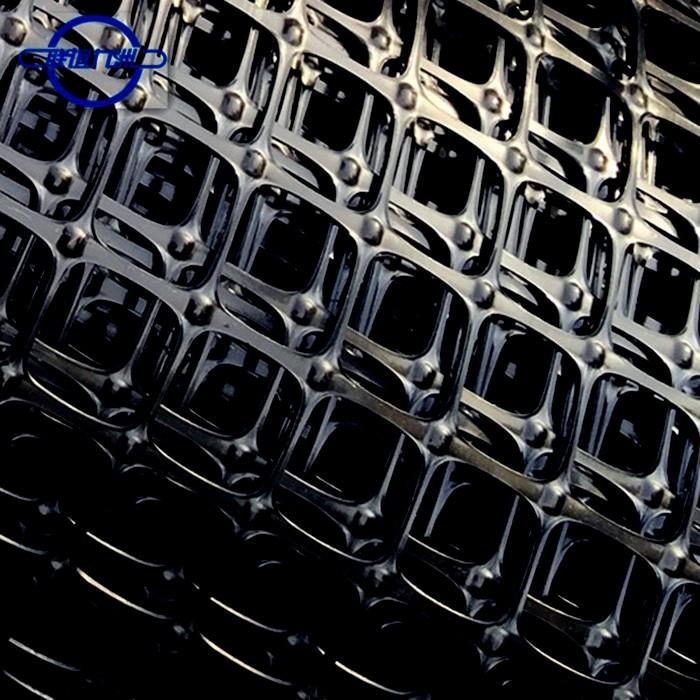
First off, what the heck is a biaxial geogrid? In simple terms, it's a grid-like material made from polymers, usually polypropylene. It has a unique structure with openings that allow soil particles to interlock with it. This interlocking creates a composite system that can significantly improve the performance of soil. There are different types of biaxial geogrids available, like the PP Biaxial Geogrid BX1100 and PP Biaxial Geogrid BX1200, and the Extruded Biaxial Geogrid. Each type has its own set of properties and benefits, but they all share the common goal of enhancing soil stability.

Now, let's talk about theme park foundation construction. Theme parks are massive projects that require a solid foundation. You've got all these heavy rides, buildings, and thousands of people walking around every day. The foundation needs to be able to support all that weight without sinking or shifting. That's where biaxial geogrids come in.
One of the main advantages of using biaxial geogrids in theme park foundation construction is their ability to distribute loads. When you have a heavy structure on top of the soil, the geogrid helps spread the load over a larger area. This reduces the stress on the soil and prevents it from failing. For example, if you have a roller coaster with a really concentrated load at its base, the geogrid can help disperse that load so that the soil beneath can handle it better.
Another benefit is improved soil stability. Biaxial geogrids increase the shear strength of the soil. They do this by providing reinforcement and preventing the soil particles from moving around too much. In a theme park, where there might be a lot of vibration from the rides and foot traffic, this added stability is crucial. It helps keep the foundation in place and reduces the risk of settlement or slope failure.
Cost - effectiveness is also a big plus. Using biaxial geogrids can actually save money in the long run. Instead of having to excavate large amounts of poor - quality soil and replace it with better - quality fill, you can use geogrids to improve the existing soil. This reduces the amount of material and labor required for the foundation construction. Plus, it can speed up the construction process, which means the theme park can open sooner and start making money.
But it's not all sunshine and rainbows. There are some challenges and considerations when using biaxial geogrids in theme park foundation construction. One of the main challenges is proper installation. The geogrid needs to be installed correctly to work effectively. It has to be placed at the right depth, with the right tension, and properly overlapped. If the installation is done poorly, the geogrid won't perform as expected, and you could end up with foundation problems down the line.
Another consideration is the environmental conditions. Theme parks can be located in all sorts of climates, from hot and dry deserts to humid coastal areas. The geogrid needs to be able to withstand these environmental conditions. For example, in a coastal area, the geogrid needs to be resistant to corrosion from saltwater. Some biaxial geogrids are designed with special coatings or additives to make them more durable in harsh environments.
Soil type also matters. Different soil types react differently to biaxial geogrids. For example, cohesive soils like clay might require a different installation method or a different type of geogrid compared to granular soils like sand. It's important to conduct a thorough soil analysis before deciding on the right geogrid for the project.
Let's take a look at some real - world examples. There have been several theme park projects where biaxial geogrids have been successfully used. In one large - scale theme park in Asia, the foundation was built on soft, compressible soil. By using biaxial geogrids, the engineers were able to reduce the settlement of the foundation and ensure the stability of the rides and buildings. The park has been operating smoothly for years, and the geogrids have proven to be a reliable solution.
In another case, a theme park in Europe was facing space constraints during construction. Instead of expanding the footprint of the foundation, they used biaxial geogrids to reinforce the existing soil. This allowed them to build taller and more complex rides without having to take up more land.
So, can biaxial geogrids be used in theme park foundation construction? The answer is a resounding yes! They offer a lot of benefits in terms of load distribution, soil stability, and cost - effectiveness. However, it's important to address the challenges and considerations, such as proper installation, environmental conditions, and soil type.
If you're involved in a theme park foundation construction project and are considering using biaxial geogrids, I'd love to have a chat with you. We can discuss your specific needs, the best type of geogrid for your project, and how to ensure a successful installation. Feel free to reach out to start the conversation and explore how our biaxial geogrids can be the perfect solution for your theme park's foundation.
References:
- Geosynthetics Institute. (Year). "Guidelines for the Use of Geogrids in Soil Reinforcement".
- ASTM International. (Year). "Standards for Geosynthetic Materials".
- Various engineering case studies on theme park foundation construction.