


In the realm of geotechnical engineering, Biaxial Plastic Geogrid has emerged as a revolutionary material, offering unparalleled reinforcement and stabilization solutions for a wide range of soil structures. As a leading supplier of Biaxial Plastic Geogrid, I am often asked about the packaging forms of this essential product. In this blog post, I will delve into the various packaging forms of Biaxial Plastic Geogrid, highlighting their advantages and suitability for different applications.
Roll Packaging
One of the most common packaging forms for Biaxial Plastic Geogrid is roll packaging. In this form, the geogrid is wound tightly onto a cylindrical core, typically made of cardboard or plastic. Roll packaging offers several advantages, making it a popular choice for both suppliers and end-users.
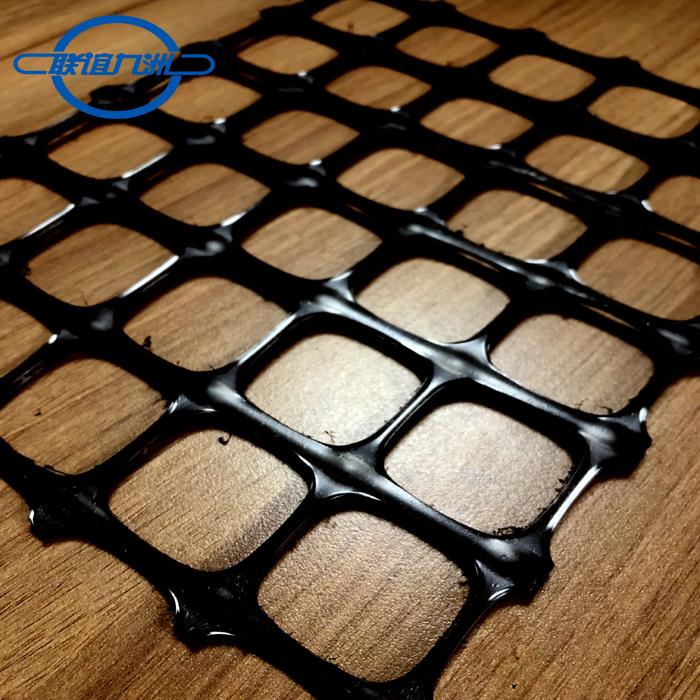

Firstly, roll packaging is highly space-efficient. The compact nature of the rolls allows for easy storage and transportation, minimizing the amount of space required in warehouses and shipping containers. This is particularly beneficial for large-scale projects where significant quantities of geogrid are needed.
Secondly, roll packaging facilitates easy handling and installation. The continuous length of the geogrid on the roll allows for seamless installation, reducing the number of joints and ensuring a more uniform reinforcement effect. The rolls can be easily unrolled on-site, and the geogrid can be cut to the desired length as needed.
Moreover, roll packaging provides protection for the geogrid during storage and transportation. The outer layer of the roll acts as a barrier against dust, moisture, and physical damage, ensuring that the geogrid remains in good condition until it is ready to be used.
For our Plastic Biaxial Geogrid, we offer roll packaging in various widths and lengths to meet the specific requirements of our customers. The rolls are carefully labeled with important information such as the product specifications, batch number, and installation instructions, making it easy for users to identify and use the geogrid correctly.
Bundle Packaging
In addition to roll packaging, Biaxial Plastic Geogrid can also be packaged in bundles. Bundle packaging involves grouping several sheets or strips of geogrid together and securing them with straps or bands. This packaging form is suitable for smaller quantities of geogrid or for applications where the geogrid needs to be cut into specific sizes before installation.
Bundle packaging offers several advantages. It allows for easy customization of the geogrid size, as the individual sheets or strips can be easily separated and cut to the desired dimensions. This is particularly useful for projects with complex geometries or specific design requirements.
Furthermore, bundle packaging is more flexible than roll packaging in terms of handling and transportation. The bundles can be easily carried and moved around on-site, and they can be stacked more efficiently in storage areas.
However, bundle packaging also has some limitations. The individual sheets or strips in the bundle may be more prone to damage during handling and transportation compared to roll packaging. Additionally, the installation process may be more time-consuming as the sheets need to be laid out and connected individually.
Our Biaxial Geogrid 40kn is available in bundle packaging for customers who require smaller quantities or specific sizes of geogrid. We ensure that the bundles are securely packaged to minimize the risk of damage during transit.
Pallet Packaging
For large-scale shipments, pallet packaging is often used for Biaxial Plastic Geogrid. Pallet packaging involves placing the rolls or bundles of geogrid on a pallet and securing them with stretch wrap or shrink wrap. This packaging form provides additional stability and protection during transportation and storage.
Pallet packaging offers several benefits. It allows for easy handling with forklifts or pallet jacks, reducing the manual labor required for loading and unloading. The pallets can be stacked on top of each other, maximizing the use of storage space in warehouses and shipping containers.
Moreover, pallet packaging provides better protection against damage compared to individual roll or bundle packaging. The stretch wrap or shrink wrap helps to keep the geogrid in place and prevents it from shifting or being damaged during transit.
We offer pallet packaging for our Biaxial Plastic Geogrid to ensure that our products are delivered to our customers in perfect condition. Our pallets are carefully designed and loaded to meet the weight and size limitations of transportation vehicles, ensuring safe and efficient delivery.
Considerations for Choosing the Right Packaging Form
When choosing the packaging form for Biaxial Plastic Geogrid, several factors need to be considered. These include the quantity of geogrid required, the transportation and storage conditions, the installation method, and the specific requirements of the project.
For large-scale projects with significant quantities of geogrid, roll or pallet packaging is usually the most suitable option. Roll packaging offers easy installation and space-efficient storage, while pallet packaging provides additional stability and protection during transportation.
For smaller projects or projects with specific size requirements, bundle packaging may be more appropriate. Bundle packaging allows for easy customization of the geogrid size and is more flexible in terms of handling and transportation.
The transportation and storage conditions also play an important role in choosing the packaging form. If the geogrid needs to be transported over long distances or stored in harsh environments, a more robust packaging form such as pallet packaging may be required to ensure its integrity.
The installation method is another factor to consider. If the geogrid needs to be installed continuously without joints, roll packaging is the obvious choice. However, if the geogrid needs to be cut into specific sizes or shapes before installation, bundle packaging may be more suitable.
Conclusion
In conclusion, the packaging form of Biaxial Plastic Geogrid plays a crucial role in ensuring its safe transportation, storage, and installation. Roll packaging, bundle packaging, and pallet packaging are the most common packaging forms, each with its own advantages and suitability for different applications.
As a leading supplier of Biaxial Plastic Geogrid, we offer a variety of packaging options to meet the diverse needs of our customers. Whether you are working on a large-scale infrastructure project or a small residential construction, we can provide you with the right packaging form for your Biaxial Plastic Geogrid.
If you are interested in learning more about our Biaxial Plastic Geogrid products or would like to discuss your specific requirements, please feel free to contact us. Our team of experts is always ready to assist you in choosing the right product and packaging form for your project.
References
- ASTM D6637/D6637M - 09(2017) Standard Specification for Geogrids Made from Oriented Polypropylene or High - Density Polyethylene.
- Koerner, R. M. (2012). Designing with Geosynthetics (5th ed.). Pearson.