


Hey there! As a supplier of PP Biaxial Geogrid, I'm super stoked to walk you through the manufacturing process of this amazing product. PP Biaxial Geogrid, short for Polypropylene Biaxial Geogrid, is a game - changer in the geotechnical engineering world. It's used in a bunch of applications like soil reinforcement, road construction, and embankment stabilization. So, let's dive right in!
Step 1: Raw Material Selection
The first step in making PP Biaxial Geogrid is choosing the right raw materials. We mainly use high - quality polypropylene resin. This resin has some awesome properties like high tensile strength, good chemical resistance, and excellent durability. It can withstand harsh environmental conditions, which is crucial since the geogrid will be buried underground or exposed to the elements.
We source our polypropylene resin from reliable suppliers. Before using it, we run a bunch of tests to make sure it meets our strict quality standards. The quality of the raw material directly affects the performance of the final product, so we can't afford to cut corners here.
Step 2: Extrusion
Once we've got the perfect polypropylene resin, it's time for the extrusion process. In this step, the resin is heated in an extruder until it turns into a molten state. Picture it like melting chocolate, but instead of a sweet treat, we're making the base for our geogrid.
The molten polypropylene is then forced through a specially designed die. The die has a specific shape that determines the initial structure of the geogrid. As the molten material comes out of the die, it forms a flat sheet with a grid - like pattern starting to take shape. This sheet is still very soft and malleable at this stage.
Step 3: Punching
After the extrusion, the flat sheet moves on to the punching stage. Here, a punching machine is used to create a series of holes in the sheet. These holes are strategically placed and sized according to the design requirements of the geogrid.
The punching process is important for a couple of reasons. First, it helps to reduce the weight of the geogrid while maintaining its strength. Second, the holes allow soil particles to interlock with the geogrid, enhancing its reinforcement effect. The size and spacing of the holes can vary depending on the specific application of the geogrid. For example, in some soil reinforcement projects, we might use a geogrid with smaller holes for better soil - geogrid interaction.
Step 4: Biaxial Stretching
Now, we come to the most critical step in the manufacturing process: biaxial stretching. This is what gives the PP Biaxial Geogrid its unique strength and performance characteristics.

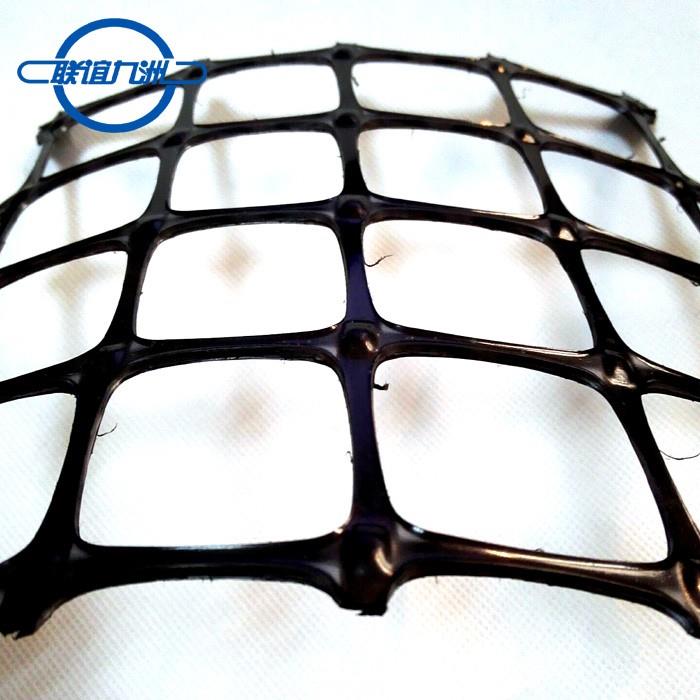
The punched sheet is placed on a stretching machine. The machine stretches the sheet simultaneously in two perpendicular directions (lengthwise and widthwise). This biaxial stretching aligns the polymer molecules in the polypropylene, creating a highly oriented structure.
As a result of this stretching, the geogrid gains significant tensile strength in both directions. It becomes much stronger and more rigid than it was before. The stretching process is carefully controlled to ensure that the geogrid reaches the desired strength and dimensional stability.
Step 5: Heat Setting
After the biaxial stretching, the geogrid goes through a heat - setting process. In this step, the geogrid is heated to a specific temperature and held at that temperature for a certain period of time. This helps to lock in the stretched structure and relieve any internal stresses that may have been created during the stretching process.
Heat setting is crucial for maintaining the shape and performance of the geogrid over time. It ensures that the geogrid doesn't shrink or lose its strength when it's exposed to different temperatures and environmental conditions. Once the heat - setting is complete, the geogrid is cooled down gradually.
Step 6: Quality Control
Throughout the manufacturing process, we have strict quality control measures in place. But after the heat - setting, we conduct a final and comprehensive quality check. We measure the tensile strength, elongation at break, aperture size, and other important properties of the geogrid.
We use advanced testing equipment to ensure that the geogrid meets all the relevant industry standards and customer requirements. Any geogrid that doesn't pass the quality check is either re - worked or discarded. This way, we can guarantee that only the highest - quality products leave our factory.
Our PP Biaxial Geogrid Products
We offer a wide range of PP Biaxial Geogrid products to meet different customer needs. For example, our PP Biaxial Geogrid BX1100 is designed for medium - load applications. It has excellent tensile strength and is very cost - effective.
If you need a geogrid for heavy - load projects, our PP Biaxial Geogrid BX1200 is a great choice. It can withstand higher stresses and is more suitable for large - scale road construction and embankment projects.
Our Polypropylene Biaxial Geogrid in general is known for its high quality and reliability. It has been used in numerous projects around the world and has received positive feedback from our customers.
Why Choose Our PP Biaxial Geogrid?
There are several reasons why you should choose our PP Biaxial Geogrid. First of all, we have a state - of - the - art manufacturing facility and a team of experienced technicians. This allows us to produce geogrids with consistent quality.
Secondly, we offer competitive prices. We understand that cost is an important factor in any project, and we strive to provide the best value for your money.
Finally, we have excellent customer service. Our team is always ready to answer your questions, provide technical support, and help you choose the right geogrid for your project.
Let's Connect
If you're in the market for high - quality PP Biaxial Geogrid, we'd love to hear from you. Whether you're a contractor, engineer, or project manager, we can provide you with the perfect solution for your geotechnical needs.
Don't hesitate to reach out to us for more information, product samples, or to discuss your specific requirements. We're committed to helping you achieve the best results in your projects.
References
- ASTM D6637/D6637M - 18, Standard Specification for Geogrids for Soil Reinforcement
- ISO 10318:2016, Geosynthetics — Geogrids