


Hey there! As a supplier of Biaxial Geogrid, I'm super stoked to walk you through the manufacturing process of this amazing product. Biaxial geogrid is a game - changer in the field of civil engineering, and understanding how it's made can give you a whole new appreciation for its capabilities.
Starting with the Raw Materials
The journey of biaxial geogrid begins with the selection of raw materials. Most of the time, we use high - quality polypropylene (PP). Polypropylene is a thermoplastic polymer that's known for its durability, chemical resistance, and excellent tensile properties. This material is readily available and cost - effective, making it a top choice for geogrid production. If you're interested in Polypropylene Geogrid, you can check out Polypropylene Geogrid for more details.
Extrusion: The First Step in Shaping
Once we've got our polypropylene, the next step is extrusion. In this process, the polypropylene resin is fed into an extruder. An extruder is like a big, high - tech sausage maker. It heats the resin until it turns into a molten state. The temperature needs to be carefully controlled because if it's too high, the polypropylene can break down, and if it's too low, it won't flow properly.
As the molten polypropylene comes out of the extruder, it passes through a die. The die is a specialized tool that gives the material its initial shape. In the case of biaxial geogrid, the die creates a flat, perforated sheet. This sheet has a pattern of holes that will be crucial for the grid's performance later on.
Orientation: Building Strength in Two Directions
The real magic of biaxial geogrid happens during the orientation process. After the extrusion, the perforated sheet is stretched in two perpendicular directions – both lengthwise (machine direction) and widthwise (transverse direction). This stretching aligns the polymer molecules in an orderly manner, creating a strong and stable grid structure.
When we stretch the sheet, we're essentially giving it super - strength. The aligned molecules can better resist forces from different directions. It's like building a house with a well - organized framework. The stretching is done using a series of rollers and mechanical systems that apply precise amounts of force. This is a critical step because the quality of the stretching directly affects the geogrid's mechanical properties, such as its tensile strength and elongation at break.
Quality Control: Ensuring Top - Notch Products
Throughout the manufacturing process, we've got strict quality control measures in place. We can't just let any old geogrid leave our factory. We test the material at various stages to make sure it meets our high standards.
We check things like the thickness of the geogrid, the size and distribution of the holes, and, of course, its mechanical properties. For example, we perform tensile tests to measure how much force the geogrid can withstand before breaking. If the results don't meet our criteria, we make adjustments to the manufacturing process to correct the issue.
Types of Biaxial Geogrid
We offer different types of biaxial geogrid to meet various customer needs. One popular option is the PP Biaxial Geogrid BX1100. This type has specific properties that make it suitable for certain applications, like soil stabilization in road construction.
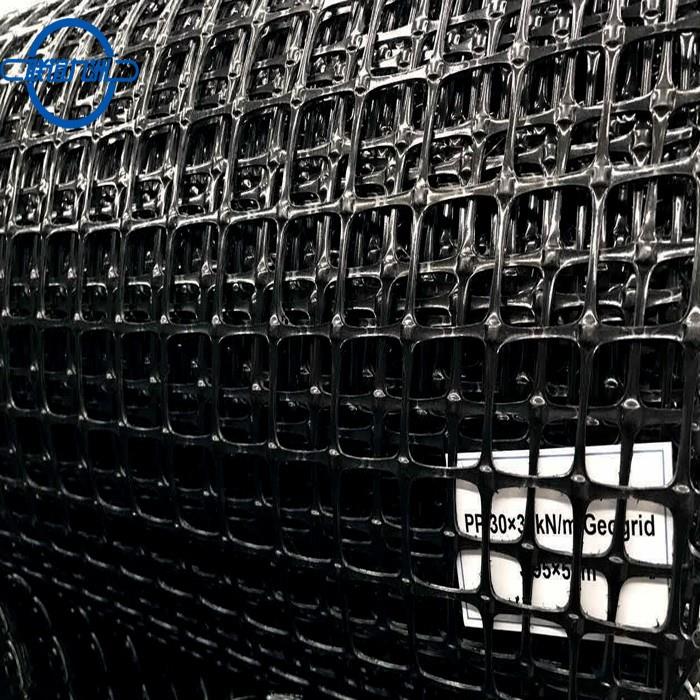

Another type is the PP Biaxial Geogrid 30kn. The "30kn" refers to its tensile strength. It's designed for projects that require a medium - strength geogrid, such as in landfill liner systems or small - scale retaining walls.
Packaging and Delivery
Once the biaxial geogrid has passed all the quality tests, it's time for packaging. We roll the geogrid onto large spools and wrap it in protective materials to prevent damage during transportation. We make sure to label each roll with important information, like the type of geogrid, its specifications, and our contact details.
We work with reliable logistics partners to ensure that our products are delivered to our customers on time and in good condition. Whether you're a small contractor working on a local project or a large construction company with projects all over the world, we've got the capacity to meet your needs.
Why Choose Our Biaxial Geogrid?
There are several reasons why our biaxial geogrid stands out. First of all, our manufacturing process is highly efficient, which allows us to offer competitive prices without sacrificing quality. We use the latest technology and equipment to ensure that every roll of geogrid we produce is of the highest standard.
Secondly, our geogrid is incredibly versatile. It can be used in a wide range of applications, from road and railway construction to slope stabilization and soil reinforcement. It helps to improve the performance and longevity of these structures, saving you time and money in the long run.
Let's Talk Business
If you're in the market for biaxial geogrid, I'd love to have a chat with you. Whether you're just starting to plan a project or you're ready to place an order, I'm here to answer your questions and help you find the right solution for your needs. You can reach out to me to discuss the details of your project and get a quote.
In conclusion, the manufacturing process of biaxial geogrid is a combination of science, technology, and careful craftsmanship. From the selection of raw materials to the final delivery, every step is crucial in creating a product that meets the high demands of the construction industry. So, if you're looking for a reliable and high - quality biaxial geogrid, look no further. Let's work together to make your projects a success!
References
- Geosynthetics Handbook, published by industry experts in civil engineering.
- Research papers on polypropylene extrusion and orientation processes.