


As a supplier of polyester geogrids, I've witnessed firsthand the importance of understanding what factors affect the service life of these remarkable products. Polyester geogrids, including Polyester Uniaxial Geogrid, Polyester Biaxial Geogrid, and Warp Knitted Polyester Geogrid, are widely used in civil engineering projects for soil reinforcement, stabilization, and erosion control. Their service life can significantly impact the long - term performance and cost - effectiveness of these projects. In this blog, I will delve into the key factors that influence the service life of polyester geogrids.
Material Quality
The quality of the raw materials used in manufacturing polyester geogrids is the foundation of their service life. High - quality polyester resins with uniform molecular structure and high inherent viscosity result in geogrids with better mechanical properties. For instance, a higher inherent viscosity means stronger intermolecular forces, which can enhance the tensile strength and resistance to creep of the geogrid.
Manufacturers should also pay attention to the quality control during the production process. Any impurities or defects in the production can weaken the geogrid structure. For example, improper extrusion or knitting processes may cause uneven distribution of fibers, leading to local stress concentrations. When these geogrids are under load, the stressed areas are more likely to experience premature failure, reducing the overall service life.
Installation Conditions
Correct installation is crucial for maximizing the service life of polyester geogrids. During installation, the geogrid must be properly laid on the prepared sub - base. If the sub - base is not level or contains sharp objects, it can cause damage to the geogrid. Sharp rocks or debris can puncture the geogrid, creating weak points that are prone to tearing under load.
Additionally, the geogrid should be tensioned correctly. Insufficient tension may result in the geogrid wrinkling or bunching, which can disrupt the stress distribution and reduce its reinforcement effect. On the contrary, over - tensioning can cause excessive stretching of the geogrid, potentially exceeding its elastic limit and causing permanent deformation, thus shortening its service life.
Another important aspect of installation is the connection between different sections of the geogrid. If the joints are not properly made, they can become a source of failure. For example, in the case of overlapping geogrids, the overlapping length and the method of securing the overlap should meet the design requirements. Loose or poorly connected joints can lead to separation of the geogrid sections under stress, compromising the integrity of the entire reinforcement system.
Environmental Factors
Chemical Exposure
Polyester geogrids can be exposed to various chemicals in the environment. Acidic or alkaline substances in soil or groundwater can react with the polyester material, causing chemical degradation. For example, in areas with high - acid soil due to industrial pollution or natural factors, the ester bonds in polyester can be hydrolyzed, weakening the geogrid's structure over time.
In addition to soil and groundwater chemistry, chemical spills from industrial activities or vehicle accidents can also pose a threat to the geogrid. Some solvents or strong oxidizing agents can dissolve or damage the polyester fibers, leading to a significant reduction in the geogrid's mechanical properties.
UV Radiation
Ultraviolet (UV) radiation is another environmental factor that can affect the service life of polyester geogrids. When exposed to sunlight, the UV rays can break the chemical bonds in the polyester material. This process, known as photo - oxidation, causes the surface of the geogrid to become brittle and can lead to cracking and loss of strength.
The degree of damage caused by UV radiation depends on the intensity and duration of exposure. In regions with high solar irradiance, the geogrid is more likely to experience rapid degradation. To mitigate the effects of UV radiation, manufacturers often add UV stabilizers to the polyester resin during production. These stabilizers can absorb or dissipate the UV energy, protecting the geogrid from photo - oxidation.
Temperature Variations
Polyester geogrids are sensitive to temperature changes. Extreme cold can make the geogrid more brittle, increasing the risk of cracking when subjected to stress. In cold climates, the thermal contraction of the geogrid can cause internal stress, which may lead to failure over time.
On the other hand, high temperatures can cause the polyester material to soften and lose its stiffness. This can affect the geogrid's ability to provide effective reinforcement, especially in applications where high - temperature resistance is required, such as in areas near hot - asphalt construction or industrial heat sources. Continuous exposure to high temperatures can also accelerate the chemical degradation process, further reducing the service life of the geogrid.
Load Conditions
The type and magnitude of the loads applied to the polyester geogrid are critical factors in determining its service life. In geotechnical applications, the geogrid may be subjected to static loads, such as the weight of the soil and any structures built on it, as well as dynamic loads, such as those caused by traffic or seismic activity.
Static loads that exceed the geogrid's design capacity can cause permanent deformation or rupture. For example, if a geogrid is used to reinforce a soil embankment and the embankment's weight is too heavy for the geogrid to handle, the geogrid may stretch beyond its elastic limit and eventually fail.
Dynamic loads, especially cyclic loads, can cause fatigue in the geogrid. Each cycle of loading and unloading can cause small amounts of damage to the polyester fibers, and over time, these damages can accumulate and lead to fatigue failure. The frequency and amplitude of the dynamic loads play important roles in the fatigue life of the geogrid. Higher - frequency and larger - amplitude loads generally result in a shorter service life.
Maintenance and Monitoring
Regular maintenance and monitoring of the polyester geogrid - reinforced structure are essential for ensuring its long - term performance. Maintenance activities may include removing debris and vegetation from the geogrid surface to prevent the accumulation of moisture and to avoid any damage caused by the growth of plants.
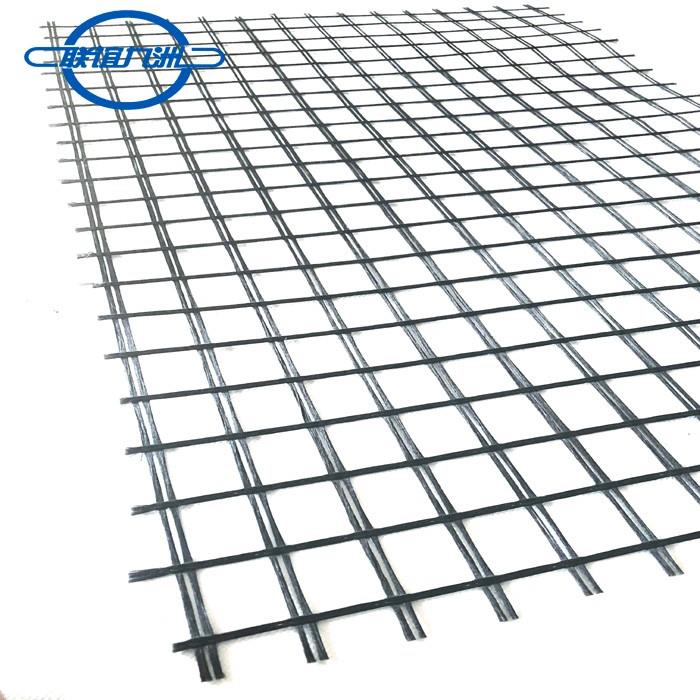

Monitoring the geogrid's performance can help detect any early signs of damage or degradation. Techniques such as visual inspection, strain measurement, and geotechnical instrumentation can be used to assess the condition of the geogrid. If any problems are detected, timely repairs or reinforcements can be carried out to extend the service life of the geogrid.
In conclusion, the service life of polyester geogrids is influenced by a variety of factors, including material quality, installation conditions, environmental factors, load conditions, and maintenance and monitoring. As a supplier, we are committed to providing high - quality polyester geogrids to our customers. However, to ensure the best performance and longest service life of our products, it is also crucial for our customers to pay attention to proper installation, environmental protection, and regular maintenance.
If you are considering using polyester geogrids for your project, or if you have any questions about our products, please feel free to contact us for further discussion and procurement negotiations. We look forward to working with you to achieve the best results for your civil engineering projects.
References
- Koerner, R. M. (2012). Designing with Geosynthetics. Pearson Prentice Hall.
- ASTM International. (2019). Standard Test Methods for Geotextiles and Geotextile - Related Products. ASTM D4354 - 19.
- Giroud, J. P., & Han, J. (2004). Design and construction guidelines for mechanically stabilized earth walls and reinforced soil slopes using geosynthetic reinforcements. Federal Highway Administration.