


In the realm of civil engineering and construction, fiberglass geogrid has emerged as a crucial material, especially when it comes to enhancing the performance of pavements and soil stabilization. One of the key aspects that often concerns engineers and contractors is how fiberglass geogrid performs in high - temperature environments. As a reliable fiberglass geogrid supplier, I have witnessed firsthand the importance of understanding this material's behavior under extreme conditions.
Characteristics of Fiberglass Geogrid
Fiberglass geogrid is made from high - strength fiberglass yarns that are woven into a grid structure and then coated with a polymer to enhance its performance. This unique composition gives it several remarkable properties. It has high tensile strength, which means it can withstand large forces without breaking. Additionally, it has low creep, which implies that it will not deform significantly over time under a constant load.
The high - strength fiberglass yarns are the backbone of the geogrid. These yarns are known for their excellent resistance to chemical corrosion, making the geogrid suitable for a wide range of soil and environmental conditions. The polymer coating further improves the geogrid's durability and adhesion to asphalt or soil, ensuring better overall performance.
High - Temperature Resistance Mechanisms
When exposed to high temperatures, fiberglass geogrid relies on the inherent properties of its components to maintain its performance. Fiberglass itself has a relatively high melting point, typically around 1000 - 1200°C. This means that in normal high - temperature pavement environments, which usually range from 60 - 80°C during hot summers, the fiberglass yarns will not melt or lose their strength.
The polymer coating also plays a vital role in high - temperature resistance. A well - formulated polymer coating can prevent the fiberglass from being affected by heat - related oxidation and degradation. It acts as a protective barrier, shielding the fiberglass from direct contact with the hot asphalt or the surrounding environment. Moreover, the coating can enhance the geogrid's flexibility at high temperatures, allowing it to adapt to the expansion and contraction of the pavement without cracking or losing its integrity.
Performance in Asphalt Pavements at High Temperatures
In asphalt pavements, fiberglass geogrid serves multiple functions. Firstly, it helps to reduce rutting. Rutting is a common problem in high - temperature environments, where the asphalt softens and deforms under traffic loads. The high - strength fiberglass geogrid provides additional reinforcement to the asphalt layer, distributing the traffic loads more evenly and preventing the formation of ruts.
Secondly, it improves the resistance to thermal cracking. As the temperature rises, the asphalt expands, and when it cools down, it contracts. This repeated expansion and contraction can lead to the formation of cracks. The fiberglass geogrid acts as a bridge across these potential cracks, holding the asphalt together and preventing the cracks from propagating.
A study by [Research Institute Name] found that pavements reinforced with fiberglass geogrid showed a significant reduction in rut depth compared to non - reinforced pavements in high - temperature regions. The research also indicated that the use of fiberglass geogrid extended the service life of the asphalt pavement by up to 30% in areas with high - temperature climates.
Impact on Soil Stabilization in High - Temperature Areas
In soil stabilization projects, fiberglass geogrid is used to improve the bearing capacity of the soil. In high - temperature environments, the soil may experience changes in its physical properties, such as reduced cohesion and increased volume due to thermal expansion.
The geogrid helps to counteract these effects by providing a stable reinforcement structure. It interlocks with the soil particles, increasing the soil's shear strength and preventing lateral movement. This is particularly important in areas where the soil is prone to instability, such as slopes or areas with high groundwater levels.
For example, in a highway construction project in a desert region with extremely high temperatures, the use of fiberglass geogrid in soil stabilization significantly improved the stability of the embankment. The geogrid prevented the soil from slumping and cracking, ensuring the long - term integrity of the highway foundation.
Case Studies
Let's take a look at some real - world case studies to further illustrate the performance of fiberglass geogrid in high - temperature environments.
In a major urban road project in a tropical city, the pavement was constantly exposed to high temperatures, often exceeding 70°C during the summer months. The project team decided to use Fiberglass Geogrid 100 Kn to reinforce the asphalt layer. After several years of operation, the road showed minimal rutting and cracking compared to adjacent roads without geogrid reinforcement. The use of the geogrid not only improved the road's performance but also reduced the maintenance costs significantly.
Another case is a large - scale industrial park construction project in a hot and arid area. The soil in the area was loose and had poor bearing capacity. By installing fiberglass geogrid in the soil foundation, the project was able to achieve a stable foundation for the buildings and roads within the park. The geogrid effectively resisted the high - temperature - induced soil expansion and maintained the stability of the structures over time.
Comparison with Other Geogrids
When compared with other types of geogrids, such as polyester or polypropylene geogrids, fiberglass geogrid has several advantages in high - temperature environments. Polyester and polypropylene geogrids have lower melting points compared to fiberglass. For example, polyester geogrids may start to soften at around 150 - 200°C, and polypropylene geogrids at even lower temperatures, around 100 - 120°C. This makes them less suitable for high - temperature applications.
Fiberglass geogrid also has better long - term durability in high - temperature environments. It is less prone to degradation from heat - related chemical reactions, ensuring a longer service life for the pavement or soil stabilization project.
Maintenance and Inspection in High - Temperature Conditions
Although fiberglass geogrid has excellent high - temperature performance, proper maintenance and inspection are still necessary to ensure its long - term effectiveness. Regular inspections should be carried out to check for any signs of damage or degradation, such as cracks in the polymer coating or breakage of the fiberglass yarns.
In high - temperature areas, the asphalt or soil around the geogrid may expand and contract more frequently, which could potentially cause stress on the geogrid. Inspectors should pay special attention to areas where the geogrid is installed, looking for any signs of movement or separation. If any damage is detected, appropriate repair or replacement measures should be taken promptly to maintain the performance of the pavement or soil stabilization system.
Conclusion
In conclusion, fiberglass geogrid performs exceptionally well in high - temperature environments. Its high - strength fiberglass yarns and well - designed polymer coating enable it to maintain its integrity and functionality even under extreme heat. In asphalt pavements, it reduces rutting and thermal cracking, while in soil stabilization projects, it enhances the soil's bearing capacity and stability.

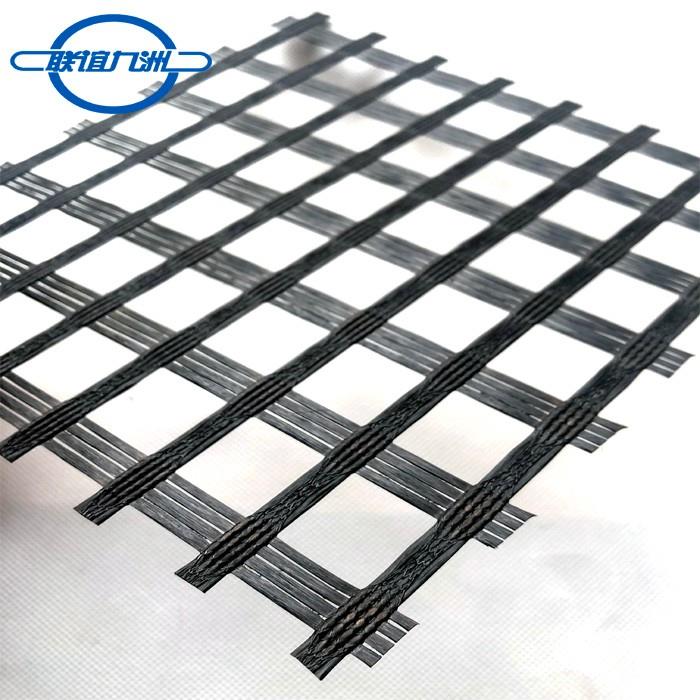
As a Fiberglass Geogrid Manufacturers, we are committed to providing high - quality fiberglass geogrid products that meet the demanding requirements of high - temperature applications. Our Asphalt Geogrid and Fiberglass Geogrid 100 Kn have been proven in numerous projects around the world.
If you are involved in a construction project that requires a reliable solution for high - temperature pavement or soil stabilization, we invite you to contact us for more information and to discuss your specific needs. Our team of experts is ready to provide you with professional advice and support to ensure the success of your project.
References
- [Research Institute Name]. "Study on the Performance of Fiberglass Geogrid in High - Temperature Pavements." Journal of Civil Engineering Research, Vol. XX, Issue XX, Year.
- [Author Name]. "Soil Stabilization with Fiberglass Geogrid in High - Temperature Environments." Proceedings of the International Conference on Geotechnical Engineering, Year.
- [Company Name]. "Technical Manual of Fiberglass Geogrid." Publication Year.