


Hey there! As a supplier of PP Non Woven Geotextile, I often get asked if this material can be used in slope stabilization. Well, let's dive right into it and find out.
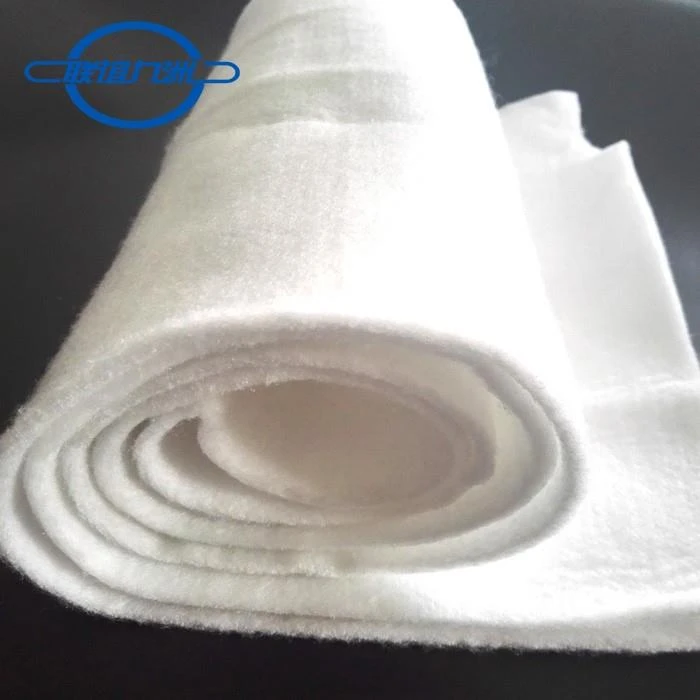
First off, what exactly is PP Non Woven Geotextile? Polypropylene Non Woven Geotextile [/non-woven-geotextile/pp-non-woven-geotextile/polypropylene-non-woven-geotextile.html] is a synthetic material made from polypropylene fibers. It's manufactured through a process that involves bonding the fibers together, creating a fabric-like structure. One common type is the PP Needle Punched Nonwoven Geotextile [/non-woven-geotextile/pp-non-woven-geotextile/pp-needle-punched-nonwoven-geotextile.html], which is made by mechanically punching the fibers to entangle them.
Now, let's talk about slope stabilization. Slopes are everywhere, from the sides of roads to the edges of embankments. They need to be stable to prevent landslides, erosion, and other problems. There are several factors that can affect slope stability, like the type of soil, the angle of the slope, and the amount of water present.
So, can PP Non Woven Geotextile help with slope stabilization? The answer is a big yes! Here's how it works.
Filtration
One of the key functions of PP Non Woven Geotextile is filtration. When water flows through the soil on a slope, it can carry small soil particles with it. Over time, this can lead to erosion and instability. The geotextile acts as a filter, allowing water to pass through while holding back the soil particles. For example, in a situation where heavy rain is hitting a slope, the geotextile will let the water seep through but stop the soil from being washed away. This helps to maintain the integrity of the soil structure on the slope.

Separation
Another important role is separation. In some slopes, different layers of soil or materials may have different properties. Without proper separation, these layers can mix, which can cause problems like uneven settlement and reduced stability. The PP Non Woven Geotextile acts as a barrier between the different layers. For instance, if there's a layer of coarse gravel on top of a layer of fine soil, the geotextile will keep them separate, ensuring that each layer can perform its intended function.
Reinforcement
PP Non Woven Geotextile can also provide reinforcement to the slope. The geotextile adds tensile strength to the soil. When the soil on the slope is under stress, like when there's a lot of weight on it or when it's being pushed by water, the geotextile helps to distribute the stress more evenly. This reduces the chances of the soil failing and the slope collapsing. For example, in a slope that's supporting a heavy structure, the geotextile can help to prevent the soil from being over - stressed and maintain the stability of the slope.
Drainage
Proper drainage is crucial for slope stability. Excess water in the soil can increase the weight of the soil and reduce its shear strength, making the slope more likely to fail. The PP Non Woven Geotextile can improve drainage on the slope. It allows water to flow through it easily, directing the water away from the slope. This helps to keep the soil dry and reduces the risk of instability. For example, in a slope that's prone to waterlogging, the geotextile can help to quickly drain the water and prevent the soil from becoming saturated.
Let's look at some real - world examples. In road construction, slopes along the roads are often protected with PP Non Woven Geotextile. The geotextile helps to prevent erosion caused by rain and vehicle traffic. It also provides reinforcement to the slope, ensuring that it can withstand the forces exerted on it. In large - scale embankment projects, the geotextile is used to separate different layers of fill materials and to improve drainage. This helps to build stable embankments that can support the intended loads.
When choosing a PP Non Woven Geotextile for slope stabilization, there are a few things to consider. The weight of the geotextile is an important factor. For example, a 12 Oz Non Woven Geotextile [/non-woven-geotextile/pp-non-woven-geotextile/12-oz-non-woven-geotextile.html] may be suitable for some slopes, but in other cases, a heavier or lighter geotextile may be needed depending on the specific requirements of the project, like the type of soil, the slope angle, and the expected loads.
The installation process is also crucial. The geotextile needs to be installed correctly to ensure its effectiveness. It should be laid out smoothly on the slope, with proper overlapping at the seams. The edges should be secured to prevent it from being displaced by wind, water, or other forces.
In conclusion, PP Non Woven Geotextile is a great option for slope stabilization. It offers multiple benefits, including filtration, separation, reinforcement, and drainage. Whether you're working on a small residential slope or a large - scale infrastructure project, it can play a vital role in ensuring the stability of the slope.
If you're in need of PP Non Woven Geotextile for your slope stabilization project, I'd love to talk to you. We have a wide range of high - quality geotextiles that can meet your specific needs. Contact us to discuss your project requirements and let's work together to find the best solution for your slope.
References
- Koerner, R. M. (2012). Designing with Geosynthetics. Prentice Hall.
- Giroud, J. P., & Bonaparte, R. (1989). Geotextile - reinforced soil slopes: A state - of - the - art review. Geotextiles and Geomembranes, 8(1), 3 - 65.